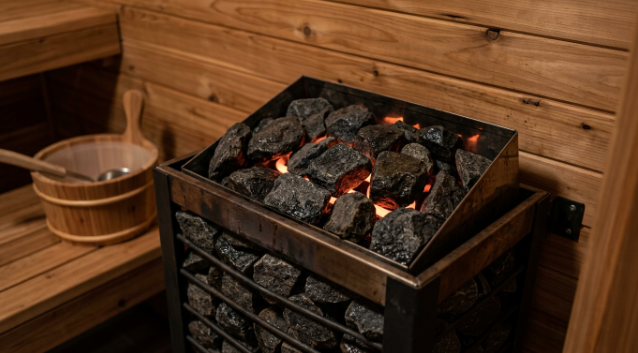
A sauna heater for a small cabin typically runs from a few hundred dollars for a compact electric unit to well over a thousand for a higher-output model, and that number is usually the smallest piece of the total budget. Electrical work, whether that means running a new 240V circuit or upgrading a panel, often costs as much or more than the heater itself. Add stones, a guard rail, and labor if a professional handles the install, and a full small-space heater project commonly lands somewhere between one and three thousand dollars depending on how much electrical infrastructure already exists.
1. The Heater Unit Itself
Electric heaters for small cabins scale in price roughly with kilowatt rating, since higher-output units use heavier-duty elements and sturdier internal components. A compact 3 to 4.5 kW unit sized for a tight cabin sits at the lower end of the electric heater market, while units built for larger rooms or with added digital controls cost more. Wood-burning heaters, common in traditional and off-grid barrel-style saunas, have a different cost structure entirely, with the unit price often comparable to a mid-range electric heater but no ongoing electricity draw once installed.
2. Electrical Work Is Often the Biggest Line Item
This is where small-space budgets get surprised. A home with an electrical panel that already has open capacity near the sauna location might only need a straightforward 240V circuit run, which a licensed electrician can often complete in a single visit. A home without spare panel capacity, or a detached location like a backyard barrel sauna far from the main panel, can require trenching, conduit, and sometimes a full subpanel, pushing electrical costs well past the price of the heater itself. Getting a firm electrician quote before buying a heater is the single best way to avoid a mid-project budget surprise.
3. Stones, Guard Rails, and Small Accessories
Sauna stones are sold separately from most heaters and priced by weight, with a small cabin heater needing a modest rock bed compared with a commercial-size unit. Stones crack over time from repeated heating and cooling cycles and need periodic replacement, generally every one to three years depending on how often the sauna runs. A guard rail, which reduces required clearance to nearby wood surfaces on some heater models, is a worthwhile add for a tight cabin where every inch of clearance matters, and it is a modest cost relative to the heater and electrical budget.
4. Wood-Burning: Fuel Cost Instead of Power Draw
A wood-burning heater trades an electric bill for a firewood budget. Seasoned hardwood costs vary regionally, and a wood-fired session burns through several logs to reach and hold temperature, which adds up over a season of regular use. For an off-grid barrel sauna without practical electrical access, wood heat sidesteps the electrical cost entirely, which can make it the more economical overall choice even though the upfront heater price is comparable to an electric unit.
5. Professional Install Versus DIY
A homeowner comfortable with basic wiring and manufacturer instructions can install many electric heaters themselves, though the 240V circuit connection itself should go through a licensed electrician in most jurisdictions regardless of who mounts the heater. Paying a sauna installer to handle the full setup, including heater mounting, stone loading, and a functional test run, adds labor cost but removes the risk of a clearance mistake or wiring error that could void a warranty or create a safety issue in a small, heat-dense space.
6. Total Cost Ranges for a Small-Space Setup
Putting the pieces together, a small cabin with existing 240V capacity nearby might complete a heater project for close to the unit price plus a modest electrical and labor add-on. A location needing a full panel upgrade or a long circuit run can see total costs climb several times higher than the heater price alone. Buyers comparing unit prices across a full range of kilowatt ratings and heater types can look at current listings from SweatDecks’ lineup to see how price scales with output before pricing out the electrical side separately.
7. Site Access and Delivery Costs
Small-space projects sometimes get overlooked on delivery logistics, particularly for a heavier heater unit or a barrel-style sauna shipped as a full kit. A backyard location with easy truck access usually incurs standard shipping, while a location requiring a lift gate, a longer carry distance from the curb, or delivery to a location without normal driveway access can add a delivery surcharge. This is a smaller line item than the electrical work, but it is worth confirming before checkout rather than discovering it as a surprise fee once the unit ships.
8. Ongoing Costs After Install
Beyond the initial project, electric heaters draw power every session, with cost depending on local electricity rates and how often the sauna runs. A correctly sized heater in a small, well-insulated cabin reaches temperature faster and runs less total time per session than an oversized unit working inefficiently, which keeps the ongoing electric bill lower. Stone replacement and occasional element checks are the main recurring maintenance costs on the electric side, while wood-burning owners budget for firewood instead.
What Does the Research Say About the Value of Regular Sauna Use?
Cost only matters relative to how much a sauna actually gets used, and the research on sauna bathing consistently ties benefit to frequency rather than any particular heater type. A 2001 review in The American Journal of Medicine and a more recent 2023 Mayo Clinic Proceedings review both describe associations between regular sauna sessions and favorable cardiovascular markers, tracked across sauna users generally rather than by equipment brand. A heater that fits the budget and gets used weekly is doing more, in that sense, than a more expensive one that sits unused because the electrical bill or upkeep felt like too much.
Frequently Asked Questions
Is an electric or wood-burning sauna heater cheaper overall? Electric costs less upfront when 240V service already exists nearby; wood-burning avoids the electric bill but requires an ongoing firewood budget.
How much does it cost to add a 240V circuit for a sauna heater? Often a few hundred to low-thousand dollars with existing panel capacity, more if a panel upgrade or long conduit run is needed.
Do sauna stones add much to the total cost? They are a modest line item but need periodic replacement every one to three years as they crack from heat cycling.
Does a small sauna cost less to heat than a large one? Yes, a correctly sized smaller heater draws less power and often runs shorter sessions than an oversized unit.
References
- Benefits and risks of sauna bathing, The American Journal of Medicine, 2001
- Does the Combination of Finnish Sauna Bathing and Other Lifestyle Factors Confer Additional Health Benefits? A Review of the Evidence, Mayo Clinic Proceedings, 2023
- Effects of heat and cold on health, with special reference to Finnish sauna bathing, American Journal of Physiology, 2018
By Marissa Todd